

Товар
Про товар
A path tracing shaderpack for vulkanite mod,better than demo pack
github:Dirt RT
use SVGF to denoise,support bloom,Tyndall effect,auto exposure
YOU NEED TO LOAD A PBR RESOURSEPACK AND USE VULKANITE 0.0.4 TO MAKE THE SHADER WORK CORRECTLY
WARNING:Make sure that your resourcepack fit your game version. Otherwise, you will get a black world!!!
If you cannot launch the game due to a strange memory or stack overflow, try adding -Dorg.lwjgl.system.stackSize=1024 to your JVM options.
Прев’ю
Зображення товару
Середовище
Вимоги та сумісність
Сумісність і вимоги
Iris1.20.1 – 1.20.2
Локальний хост
Required
Хостинг на сервісах
Unsupported
Умови
Ліцензія
Умови використання, зміни та поширення цього товару.
GNU General Public License v3.0 onlyModrinth
Реліз
Останній реліз
vv0.3.0
18.06.2026 · Modrinth
Feat: Groundbreaking denoiser — SG-based physical irradiance integration + SVGF with Mahalanobis edge-stopping
This is a landmark release that rewrites the entire denoising pipeline from the
ground up. The new denoiser produces dramatically cleaner, more stable, and
more physically accurate results than ALL previous versions combined.
CORE INNOVATION: Spherical Gaussian (SG) Physical Irradiance Integration
The old SH (Spherical Harmonics) irradiance projection has been...
Галерея
Зображення проєкту
Скриншоти та зображення з оригінальної сторінки Modrinth.
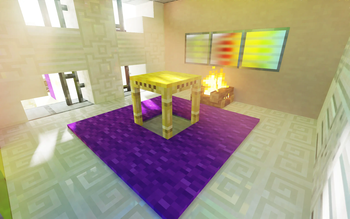
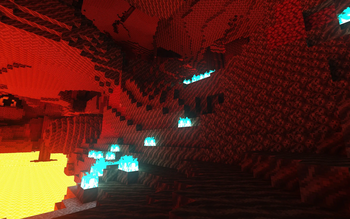
Nether
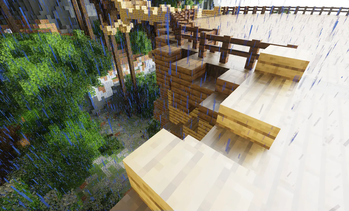
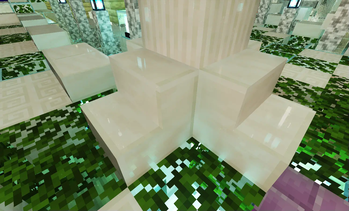
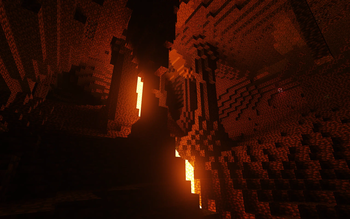
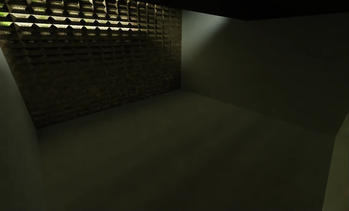
Caustics
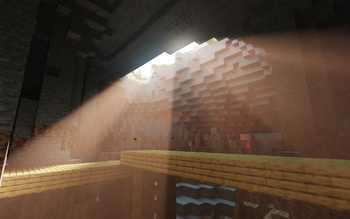
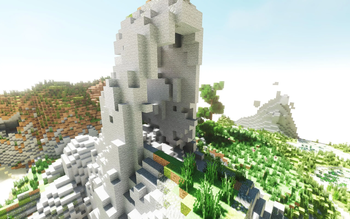
GI
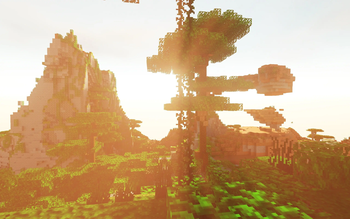
Dawn
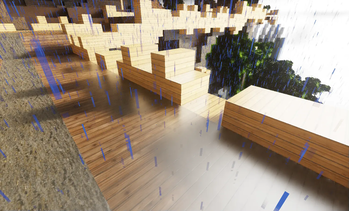
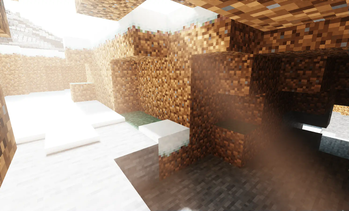
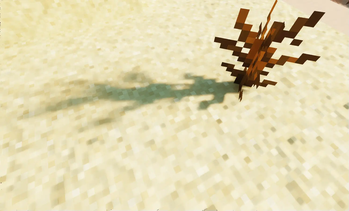
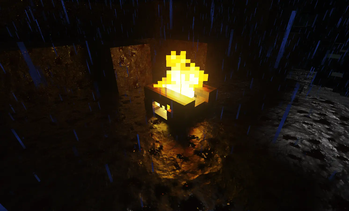
Realistic
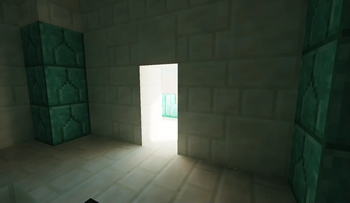
indoor
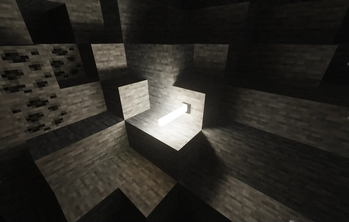
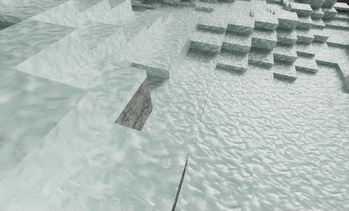
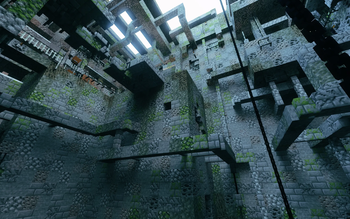
ReSTIR with custom SVGF denoiser
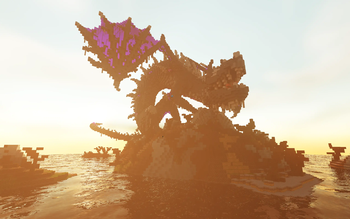
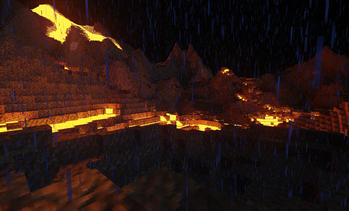
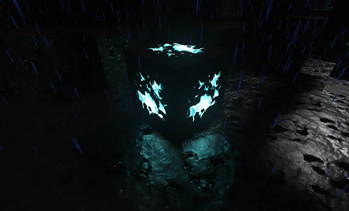
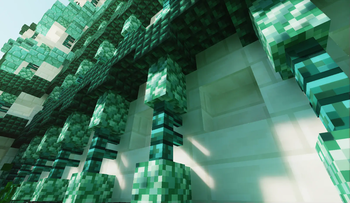
GI
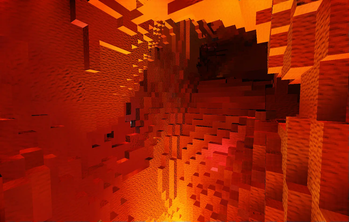
indirect lighting
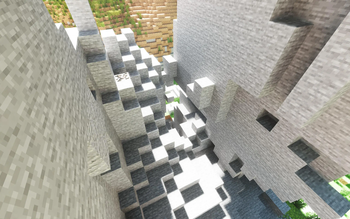
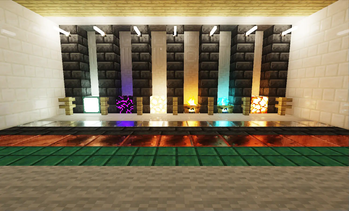
Path Traced Indirect Lighting
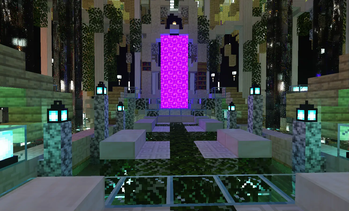
Історія
Версії проєкту
Опубліковані версії та оригінальні файли Modrinth.
vv0.3.0ОстанняRelease
18.06.2026 · 3 931 завантаження
Iris1.20.1
Feat: Groundbreaking denoiser — SG-based physical irradiance integration + SVGF with Mahalanobis edge-stopping
This is a landmark release that rewrites the entire denoising pipeline from the
ground up. The new denoiser produces dramatically cleaner, more stable, and
more physically accurate results than ALL previous versions combined.
CORE INNOVATION: Spherical Gaussian (SG) Physical Irradiance Integration
The old SH (Spherical Harmonics) irradiance projection has been completely
replaced with a physically-based SG (Spherical Gaussian) integration framework:
• Dual-SG product convolution — light lobe × cosine lobe solved analytically
via SGProduct(), yielding exact attenuation without series truncation
• HSG (Hemispherical Spherical Gaussian) integral — closed-form integration
over the hemisphere using a rational approximation of the erf function
• NaN-safe math primitives throughout — precise_erf() with Abramowitz-Stegun
coefficients, expm1_over_x() with 1st-order Taylor fallback, and
safe_lambda_over_one_minus_exp_two_lambda() with cubic Taylor expansion
near the singular point λ → 0
• Numerically stable dual-SG product — sqrt_term clamped against negative
floating-point drift, axis normalization with ε-guard, log-space amplitude
accumulation to avoid overflow
This means every irradiance sample is now projected and reconstructed with
physically correct cosine-weighted integration, eliminating the ringing,
energy loss, and directional smearing that plagued the old SH pipeline.
TEMPORAL ACCUMULATION: Unbiased Welford Variance Estimation
Previous versions used a biased exponential moving variance. The new pipeline
employs Welford's online algorithm — a numerically stable, UNBIASED estimator
that tracks both mean and variance in a single pass:
• True population variance (not EMA approximation) → spatial filter gets
accurate uncertainty estimates
• Per-pixel temporal weight based on geometric consistency (normal × depth
× position reprojection validation)
• Exponential moving average blending with adaptive history length —
faster convergence on new surfaces, longer accumulation on static ones
SPATIAL FILTER: SVGF with Mahalanobis-Distance Edge-Stopping
The à-trous wavelet filter has been completely rewritten with a multi-
dimensional edge-stopping function that jointly considers:
• Normal similarity: pow(dot(n1, n2), NORMAL_POWER) — cosine-weighted
• Depth discontinuity: anisotropic kernel stretching along surfaces at
grazing angles, staying tight across depth edges
• Luminance-directional statistical distance: full Mahalanobis distance
combining SH-derived intrinsic variance (|dir|² vs Y²) with temporal
Monte Carlo variance → variance-guided adaptive stopping
6-level à-trous hierarchy: step 1→2→4→8→16→32 pixels, each with R0
tuned to the spatial scale. High-variance regions get aggressive filtering;
well-converged regions preserve fine detail. This is a night-and-day
difference from the old uniform blur.
ADDITIONAL IMPROVEMENTS
• Neural network tone mapper (20 hidden neurons, 4→20→3 architecture with
sigmoid activations) — trained to approximate a high-quality photographic
tone curve, replacing the old hard-coded filmic curve
• Full HDR pipeline (hdr.glsl) — proper HDR→SDR conversion with luminance
adaptation
• Physically-based atmosphere scattering rewrite — Rayleigh/Mie with per-
dimension parameters (Overworld/Nether/End), sunlight brightness boosted
10× to match real-world solar irradiance ratios
• Importance sampling via Gaussian sphere function — faster convergence
with fewer fireflies
• Parallax Occlusion Mapping — geometric detail on flat surfaces
• GGX denominator epsilon guards — prevents NaN/Inf propagation in
specular BRDF evaluation
• Fixed a serious TAA reprojection bug, reduced VRAM usage
• Comprehensive technical documentation (main.pdf / main_en.pdf) covering
the full pipeline with mathematical derivations
RESULT: This is not an incremental improvement. The denoising quality jump
is categorical — clean indirect illumination that converges faster, preserves
geometric detail, and eliminates the noise bias that plagued every prior
version. The renderer is now fundamentally physically-grounded rather than
heuristic.
vv0.2.0Release
03.12.2024 · 97 232 завантаження
Iris1.20.11.20.2
Fixed TAA bugs
Use more efficient algorithm (in doc/main_en.pdf) to create a better denoiser. Now the scene is more realistic!
Make atmosphere rendering more faster
Less noisy image
vv0.1.5Release
30.05.2024 · 25 359 завантаження
Iris1.20.11.20.2
better shadow
improved image quality
fixed many bugs
v0.1.4Release
26.05.2024 · 868 завантаження
Iris1.20.11.20.2
fixed some bugs
cleaner image
v0.1.3Release
07.02.2024 · 9 846 завантаження
Iris1.20.11.20.2
Fixed a SEIROUS BUG on NVIDIA driver version 551.23
Added more settings and improved some qualities
v0.1.2Release
28.01.2024 · 1 234 завантаження
Iris1.20.11.20.2
Add clouds (ugly)
fixed some bugs and improved image detail
v0.1.1Release
14.01.2024 · 3 711 завантаження
Iris1.20.1
improved quality and fixed bugs
v0.1.0Release
11.01.2024 · 662 завантаження
Iris1.20.1
Added weather support(rainy),improved image quality and different dimension has different atmosphere effects
Гортайте товари колесом або стрілками